Key takeaways
- Expansive clay swells when it absorbs water and shrinks when it dries.
- Uneven moisture around the house causes more damage than steady moisture.
- Big trees near the foundation can dry the soil out under one side.
- Gutters, downspouts and grading control most of the water you can control.
- Consistent soil moisture during droughts helps some homes, but ask a pro first.
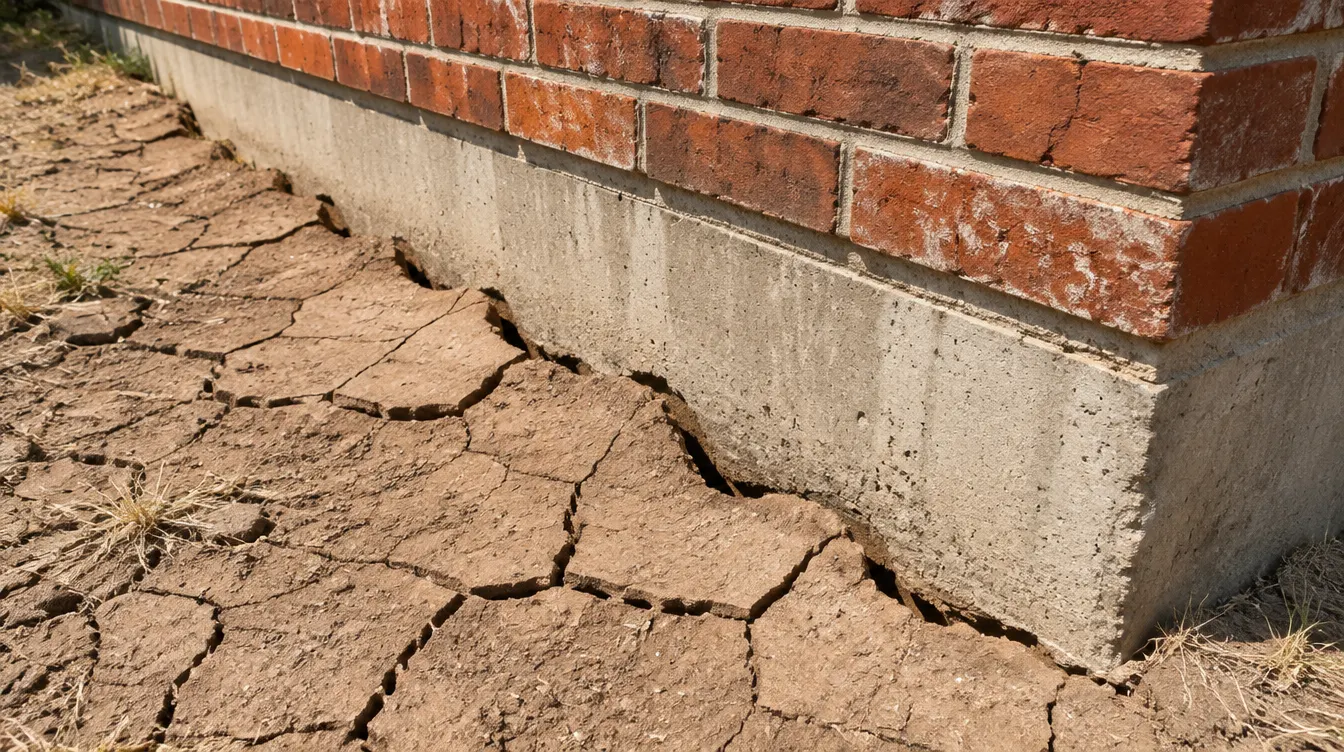
If you’ve lived in Shreveport through a wet spring followed by a scorching August, you’ve watched clay in action, maybe without knowing it. That yard that turned to slick mud in April is cracked into plates by late summer, with gaps wide enough to drop a pencil into. The same thing is happening under your house.
What makes clay swell
Clay is made of extremely fine, flat particles. Certain types, called expansive clays, take water in between those particles and physically grow in volume. When the water leaves, they shrink. Plenty of soil in northwest Louisiana has enough expansive clay to move a house.
The movement itself isn’t the main problem. A slab that rose and fell evenly everywhere would be fine. The damage comes when one part of the soil is wet and another part is dry, so one side of the house lifts or drops while the other stays put.
What makes moisture uneven
Several everyday things do it:
Downspouts that empty right at a corner soak that spot every time it rains. Flower beds with edging hold water against the slab. A yard that slopes toward the house sends runoff to the foundation.
On the dry side, the south and west walls get more sun and dry out faster. A big tree near the house pulls water out of the soil through the summer. Water oaks, pines and other large trees are common in Shreveport yards, and their roots can reach well past the edge of the canopy.
Then there are leaks. A broken drain line under a slab can keep one area wet year-round, softening the soil and sometimes heaving the middle of the house.
What you can do
Most of it comes down to sending water away from the house and keeping the soil around it from swinging between soaked and bone dry.
Get the gutters clean and working, and extend downspouts several feet out. Fix low spots and make sure the ground slopes away from the foundation. If water still collects, a French drain or surface drain may be needed; the drainage correction page covers the options.
During long droughts, some local companies suggest running soaker hoses a short distance from the slab to keep the clay from shrinking away. That advice is common in this part of the South, but it isn’t right for every house. Ask before you start.
If you have a big tree close to the house, ask a foundation company whether it’s likely affecting the slab before doing anything drastic.
When it’s already moved
Drainage and watering help prevent movement and protect a repair. They won’t put a dropped corner back. If you’re seeing stair-step cracks or sloping floors, the next step is an inspection. Our guide to foundation warning signs covers what to look for first.
Frequently asked questions
Should I water my foundation during a drought?
Some foundation companies recommend soaker hoses set a short distance from the slab during long dry spells to keep the soil from shrinking away. Too much water causes its own problems, so ask a local company whether it makes sense for your house and how much.
Do I need to cut down the tree next to my house?
Not automatically. It depends on the species, size and distance from the foundation. A root barrier or regular watering may be enough. Talk to the foundation company, and an arborist if you're thinking of removing a big tree, since removal can also change soil moisture.
Is all the soil around Shreveport clay?
No. Soils vary across Caddo and Bossier parishes, and some areas are sandier. Clay is common enough that foundation movement is a familiar problem here.