Key takeaways
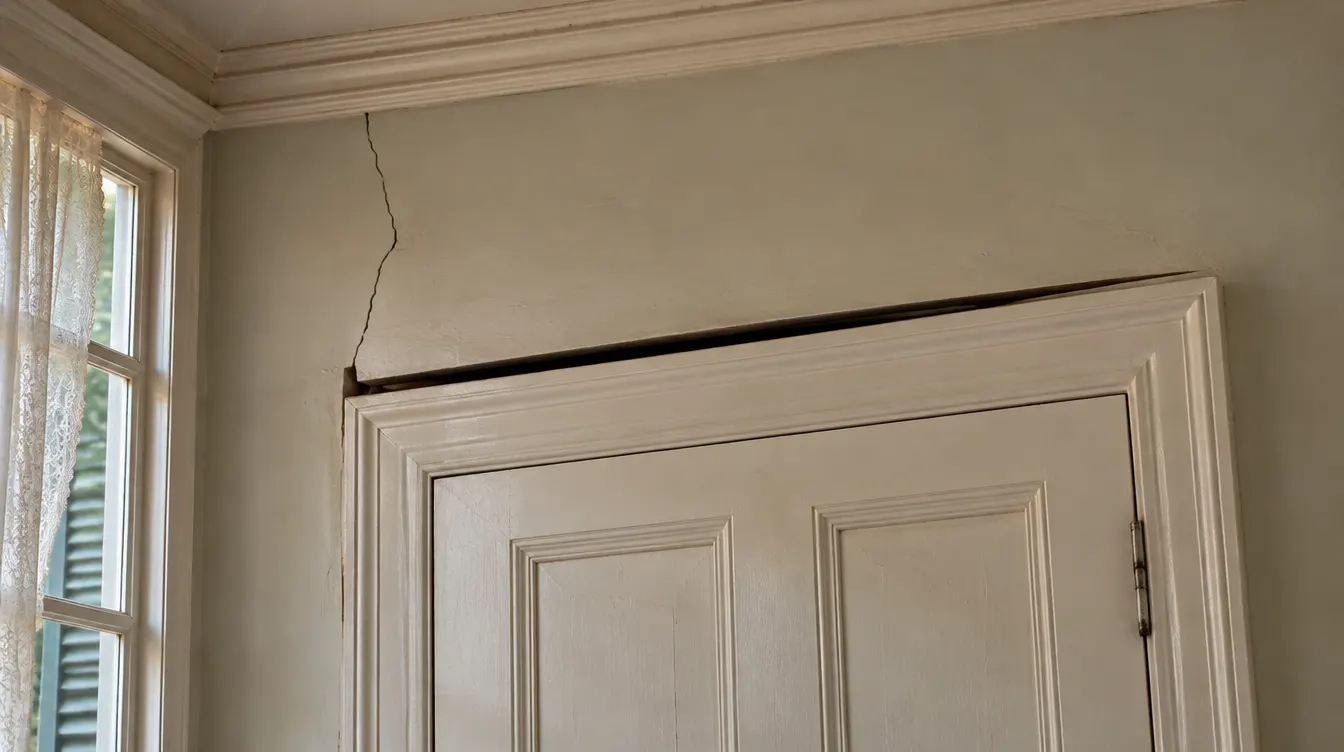
- Stair-step cracks in brick and diagonal cracks off door corners usually mean movement.
- Doors and windows that start sticking, especially seasonally, are an early sign.
- Sloping floors and gaps at baseboards or ceilings show where the house has dropped.
- On raised homes, bouncy floors and musty smells point under the house.
- Change over time matters more than any single crack.
Late summer is when a lot of Shreveport homeowners notice something. The ground has been baking for weeks, the clay has pulled back from the slab, and a door that closed fine in April now has to be shouldered shut. Some of what you notice is nothing, and some of it is the start of a repair. The difference usually shows in where the crack is, which way it runs and whether it keeps growing.
Outside the house
Brick tells you a lot. Look at the corners of the house and below windows for cracks that zigzag up through the mortar joints like steps. A stair-step crack usually means one part of the foundation has dropped relative to the rest. Also look for brick pulling away from window frames or a gap opening between the brick and the trim.
Check the slab edge where you can see it. A chunk breaking off at a corner, or a crack running down the exposed face, is worth noting. On a raised house, look at the piers you can see through the vents or skirting for leaning or cracking.
Inside the house
Doors are the easiest early warning. Watch for doors that rub at the top corner, won’t latch, or swing on their own. A door frame that has gone out of square often shows a wedge-shaped gap above the door.
Then the walls. Cracks running at an angle from the corners of doors and windows, cracks where the wall meets the ceiling, and baseboards separating from the floor all show movement.
Floors you can feel slope are the clearest sign. Hard floors may also crack in a line across a room, and tile can pop loose.
Under raised homes
Pier and beam houses add a few of their own. Floors that bounce more than they used to, a dip in the middle of a room and a damp, musty smell from below often trace to sinking piers, crushed shims or wet wood in the crawl space.
What isn’t usually a problem
Thin, straight hairline cracks in drywall near a seam, or a single fine crack across a garage slab that hasn’t changed in years, are common in houses of any age. Nail pops in drywall usually come from framing, not the foundation.
Track it
Mark the ends of a crack with a pencil, write the date, and snap a photo with a coin for scale. Check after the next long dry stretch and after the next heavy rain. A crack that runs past its marks is active. Bring the photos when the company comes out for a foundation inspection. They’ll learn more from a month of change than from one look.
Frequently asked questions
My doors stick in summer and loosen up in winter. Is that the foundation?
It can be. Clay shrinks in hot, dry months and swells when it's wet, and the house shifts with it. Humidity also swells wood doors, though, so watch whether the gaps around the door change shape too.
Are cracks in a new house normal?
Hairline shrinkage cracks in drywall and concrete are common in the first year or two. Cracks that widen, run diagonally or show offset are worth reporting to the builder.
What should I do first if I see these signs?
Take dated photos, mark crack ends with a pencil, and request an inspection. Check your gutters and downspouts in the meantime.